⭐ 4.9 Google Rating | 179 Reviews
Commercial Solar System Costs
Commercial solar costs vary by system size, site conditions and equipment. But the upfront price is only part of the picture. Sharp EIT can help you understand the project cost, available incentives, projected savings, payback and estimated ROI before you invest.

#You'll Be in Great Company
From Local Businesses to National Brands. Across IT, Print, LED, AV and Commercial Solar solutions Australia-wide.




How Much Do Commercial Solar Panels Cost?
Commercial solar systems typically cost around $700–$1,200 per kW installed after applicable incentives, with larger systems generally achieving a lower cost per kW.
As a guide, a 100kW commercial solar system may cost around $70,000–$100,000 after applicable incentives for a standard rooftop installation.
The final price depends on more than system size. Roof condition, electrical infrastructure, equipment selection, site access, structural requirements and network connection requirements can all affect the total project cost.
Available government incentives may also reduce the upfront investment. The Australian Government has announced plans to expand the Small-scale Renewable Energy Scheme to eligible solar PV systems above 100kW and up to 1MW from 1 October 2026, subject to the necessary regulations being in place.
For a more accurate figure, Sharp EIT can assess your site, electricity usage and system requirements to provide a detailed cost estimate.
Funding Options for Commercial Solar Systems
#Funding Types For Commercial Solar Systems
Choose between an outright capital purchase or commercial finance, depending on your cash flow, project cost and investment priorities.
Finance
- Preserve working capital
- Spread costs over time
- Install sooner with less upfront outlay
- Suitable for larger or multi-site projects
- Finance through DLL, subject to approval
CapEx (pay upfront)
- Own the system from day one
- No ongoing finance repayments
- Potentially stronger long-term return
- Best suited to businesses with available capital
- Full ownership of the solar asset

Understand Your Commercial Solar ROI Before You Invest
Sharp EIT can help you look beyond the installation price and understand the complete financial picture.
Led by Neil Armstrong, General Manager – Green Energy, our team can assess your project cost, available incentives, projected electricity savings, payback period and estimated return on investment.
This gives you a clearer understanding of what commercial solar could cost, save and return for your business before you decide to proceed.
#What Affects Commercial Solar System Cost?
No two commercial solar projects cost exactly the same. System size matters, but your site, electricity usage, infrastructure and project requirements can all influence the final investment. Understanding these factors upfront helps avoid unexpected costs and ensures the system is designed around the financial outcome you want to achieve.
- System size (kW)
Larger systems generally achieve a lower installed cost per kW through economies of scale. The right size depends on your electricity demand, available space and how much solar your business can use onsite.
- Operating hours & load profile
When your business uses electricity can be just as important as how much it uses. Matching solar generation to daytime consumption can increase savings, shorten payback and improve ROI.
- Roof type & site conditions
Roof structure, condition, access, shading and mounting requirements affect installation complexity. Sharp EIT assesses these factors before finalising the system design and project cost.
- Electrical & switchboard upgrades
Existing switchboards, metering and electrical infrastructure may require upgrades to support commercial solar. Identifying these requirements early helps provide a more accurate project budget.
- Grid connection & approvals
Network export limits, connection requirements and distributor approvals vary by site and system size. These can affect both project cost and delivery time.
- Engineering, design & monitoring
Good commercial solar design considers system performance, safety, compliance and long-term reliability—not simply how many panels will fit on the roof.
- Equipment, warranties & ongoing support
Panel and inverter quality, warranties and service support all affect upfront cost and long-term value. The lowest-priced equipment is not always the lowest-cost option over the life of the system.
- Battery Storage (Optional)
Adding battery storage increases the initial investment, but it may improve solar self-consumption, reduce peak demand costs or provide greater energy flexibility. We assess whether the additional investment makes financial sense for your site.
Explore Our Recent Commercial Solar Projects
#Trusted by the hospitality industrythe transport industrythe logistics industrythe manufacturing industrythe construction industrythe wholesale industryand the retail industry
Below are a few recent examples. We deliver commercial solar systems across a wide range of site types — from straightforward rooftop installs to larger, staged projects.

Commercial Solar PanelsCommercial Solar
474kW Commercial Solar System – Dincel Structural Walling
Commercial rooftop solar system designed to reduce energy costs with no disruption to operations. Sharp EIT Solutions delivered this 474kW system for Dincel Structural Walling, helping the manufacturer improve energy efficiency across its facility.

Commercial Solar PanelsCommercial Solar
139kW Commercial Solar System – GWS GIANTS
Sharp EIT Solutions partnered with The Greater Western Sydney GIANTS to deliver a 139kW commercial rooftop solar system across key areas of the club’s high-performance facility.

HospitalityCommercial Solar PanelsCommercial Solar
100kW Commercial Solar System – North Ryde RSL
Commercial rooftop solar system designed to reduce energy costs and support sustainability goals. Sharp EIT Solutions delivered this 100kW system at North Ryde RSL, helping the club lower its operating costs and improve daytime energy use.
CorporateCommercial Solar PanelsCommercial Solar
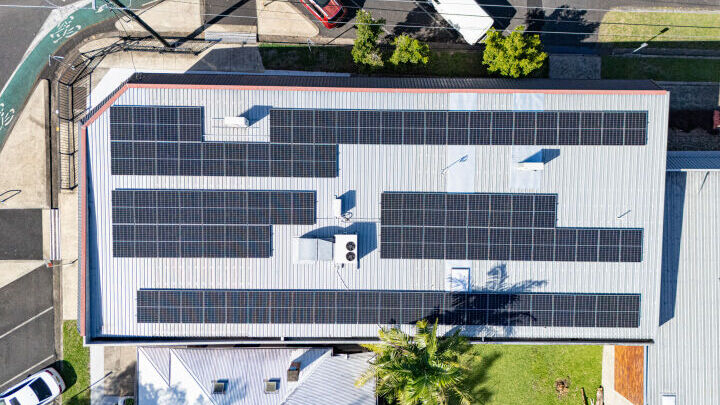
39.6kW Commercial Solar System – Northern Rivers Business Centre
A tailored rooftop solar system designed to reduce operating costs and improve long-term energy independence. Estimated savings of $9,732 per year with an estimated 2–3 year payback.
Recent articles
#Latest Commercial Solar News & Insights
See how commercial solar is transforming energy outcomes across Australian industries — from cost reduction to smarter operations.

Commercial Solar
Commercial Solar Rebates Expanded to 1MW
The Federal Government has announced one of the biggest changes to commercial solar incentives in years.

Announcement
Sharp EIT Expands Commercial Solar Finance with DLL
Sharp EIT Solutions has partnered with DLL to provide flexible finance for commercial solar, battery and EV projects — helping eligible businesses reduce upfront costs and start saving sooner.
Think Piece
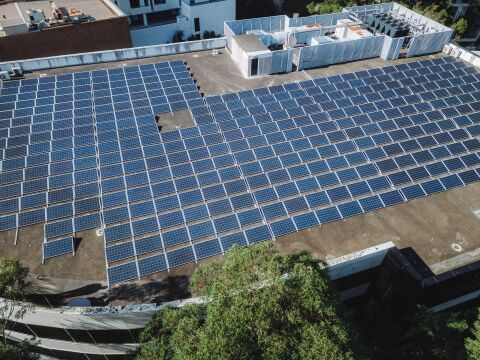
Is Commercial Solar Right for Your Business? Renters, Owners & Strata Explained
Discover the best commercial solar panels, battery systems, and full commercial solar solutions suited for all types of businesses.

Think Piece
Reducing Business Energy Costs with Commercial Solar
Slash Your Bills, Boost Sustainability, and Take Control of Your Energy Costs
Think Piece
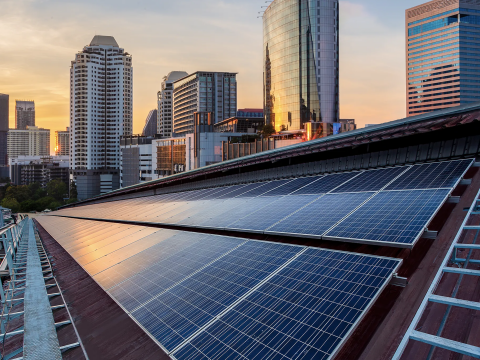
Sun Tax in Australia: How to Avoid New Solar Export Charges
Learn how the Sun Tax affects commercial solar systems and what businesses can do to minimise costs.
#Need a Detailed Cost Estimate for Your Site?
Every business is different — and so is every solar solution. Tell us about your site and electricity usage and we can provide an indicative system size, project cost, available incentives, projected savings and estimated ROI.
#Your Questions About Commercial Solar Costs
Commercial solar systems typically cost around $700–$1,200 per kW installed after applicable incentives, with larger systems generally achieving a lower cost per kW. As a guide, a 100kW commercial solar system may cost around $70,000–$100,000 after applicable incentives for a standard rooftop installation.
Actual pricing depends on system size, site conditions, equipment, electrical infrastructure and network requirements.
For a broader overview of system types and options, visit our Commercial Solar Solutions page.
Commercial solar costs generally decrease per kW as system size increases. Smaller systems may sit towards the upper end of the $700–$1,200 per kW range, while larger systems can benefit from economies of scale.
Final pricing also depends on roof conditions, electrical requirements, equipment selection and installation complexity.
Learn more about commercial solar system sizes.
Commercial solar installation costs depend on the system size, roof or site conditions, electrical infrastructure, access requirements and the complexity of the installation.
Costs can also be affected by switchboard upgrades, structural works, metering, network protection and grid connection requirements. These are assessed as part of the project so they can be factored into the overall commercial solar system cost before installation.
Commercial solar payback depends on the project cost, electricity tariffs, daytime energy use, applicable incentives and how much solar generation is consumed onsite. Many well-matched commercial solar projects can achieve payback in around 2–4 years, although the actual result varies by site and system design.
Sharp EIT models projected electricity savings, payback and estimated ROI using your actual energy profile so you can assess the financial case before investing.
Government incentives may reduce the upfront cost of eligible commercial solar systems, with the support available depending on system size, installation date and current government schemes.
Sharp EIT can identify the incentives your project may qualify for and factor their estimated value into your commercial solar cost, savings and payback modelling.
Businesses can either purchase commercial solar outright or, if eligible, use commercial finance to spread the project cost over an agreed term.
The right option depends on project cost, cash flow and investment priorities. Sharp EIT can compare upfront CAPEX with finance options, including $0 upfront structures for eligible businesses.
Compare our Solar Finance Options.
Yes. Adding battery storage increases the upfront project cost, with pricing depending on battery capacity, technology, site infrastructure and integration requirements.
The important question is whether battery storage improves the overall business case by increasing solar self-consumption, reducing peak demand, shifting energy use or providing backup power.
Learn more about Commercial Battery Storage.
Common cost drivers include roof condition and access, structural requirements, switchboard upgrades, network connection requirements, metering, system size, equipment selection and battery storage.
A site-specific assessment identifies which of these factors apply before the final system design and project cost are confirmed.
Commercial solar can be a worthwhile investment for businesses with sufficient electricity usage, particularly where a high proportion of power is consumed during daylight hours.
The financial case depends on project cost, electricity tariffs, applicable incentives, expected solar generation, onsite consumption, payback period and estimated ROI. Sharp EIT models these factors using your actual energy profile so you can assess the return before proceeding.
The right commercial solar system size depends on your electricity usage, operating hours, available roof or land area, future energy requirements and network constraints.
Sharp EIT uses your interval data and site profile to recommend a system size designed around onsite solar use, expected savings and financial return rather than simply installing the largest system that will fit.
Yes. Commercial solar can be combined with battery storage and EV charging infrastructure as part of a broader energy solution.
Whether these additions make financial sense depends on your site, load profile, operating hours and future energy requirements. Sharp EIT can model solar, battery storage and EV charging together as part of the project assessment.
For an accurate commercial solar cost estimate, Sharp EIT assesses your electricity usage, site conditions, available installation area, electrical infrastructure and project goals.
We then recommend an appropriate system size and provide a commercial solar quote outlining expected project cost, projected savings, payback and applicable incentives.