⭐ 4.9 Google Rating | 179 Reviews
Commercial Solar System Sizes
Compare common commercial solar system sizes from 20kW to 1MW+ and understand what may suit your electricity usage, site and future energy requirements.

#You'll Be in Great Company
From Local Businesses to National Brands. Across IT, Print, LED, AV and Commercial Solar solutions Australia-wide.




Solar System Sizes
#Find the Right Commercial Solar System Size
Below is a simple guide to common commercial solar system size ranges. Your best fit depends on your roof space, operating hours and how much of the solar power your business can use onsite.

20kW – 30kW Commercial Solar Systems
Small Commercial Sites
A common starting range for businesses with relatively low to moderate daytime electricity demand.
May suit sites with:
- Consistent daytime electricity use
- Smaller available roof areas
- Lower overall energy demand
- Limited export requirements
Best suited where a meaningful proportion of the solar generated can be used onsite during the day.

30kW – 75kW Commercial Solar Systems
Growing Businesses
A common commercial solar range for businesses with higher and more consistent daytime electricity consumption.
May suit sites with:
- Moderate daytime energy demand
- Larger available roof areas
- Extended operating hours
- Opportunities to reduce grid consumption during the day
Actual system size should be matched to interval data, onsite consumption and network requirements.

100kW - 250kW Commercial Solar Systems
Medium to Large Commercial Sites
Designed for businesses with substantial daytime electricity demand and enough available roof or land area to support a larger system.
May suit sites with:
- High daytime electricity consumption
- Large roof or installation areas
- Consistent weekday operating loads
- Significant potential to reduce grid electricity use
At this scale, electrical infrastructure and network connection requirements become increasingly important to system design.

250kW – 500kW Commercial Solar Systems
Large Commercial & Industrial Sites
Larger commercial solar systems can suit energy-intensive operations with significant and predictable daytime loads.
May suit sites with:
- High and consistent electricity demand
- Large warehouses or industrial facilities
- Significant available roof or land area
- Suitable electrical and network infrastructure
System design should consider onsite consumption, network capacity, export constraints and future energy requirements.

500kW – 1MW Commercial Solar Systems
Large-Scale Commercial & Industrial Projects
This range is generally suited to sites with very high electricity demand and substantial space available for solar generation.
May suit sites with:
- Large industrial or manufacturing loads
- Significant daytime electricity consumption
- Extensive roof, car park or land area
- More complex electrical and network requirements
Projects at this scale require detailed engineering, load analysis and network assessment before the final system size is confirmed.
1MW+ Commercial Solar Solutions
Multi-Megawatt Projects
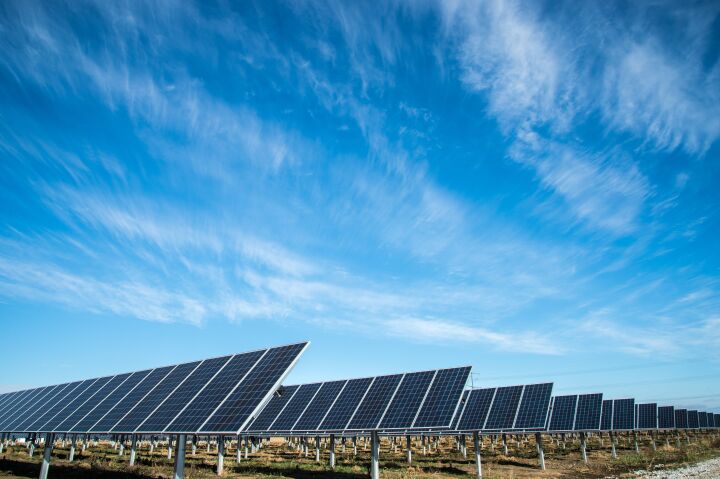
Large-scale commercial and industrial solar systems are individually engineered around the site's energy demand, infrastructure and available installation area.
Key considerations include:
- Detailed interval and load analysis
- Roof, ground or car park installation opportunities
- Electrical and network capacity
- Export and connection requirements
- Future battery storage, EV charging or expansion
Large-scale projects can include rooftop, ground-mount and AgriSolar systems, depending on the site, available land and energy requirements. Sharp EIT can design and deliver commercial solar projects from 1MW through to multi-megawatt installations.
#🎥 Hear From One of Our Clients
"Sharp EIT made the switch to solar effortless. The install was fast, the team was great to deal with". Joe Kelly, CEO of North Ryde RSL.

#Need Help Choosing a Solar System Size?
Get expert advice on selecting the right commercial solar system for your energy usage, business type, and infrastructure — from 20kW systems to multi-megawatt installations.
#FAQs About Commercial Solar System Sizes
The right commercial solar system size depends on how much electricity your business uses and when it uses it, as well as available roof or land area, operating hours, future energy requirements and network constraints.
Sharp EIT analyses your interval data and site requirements to recommend a system size designed around onsite solar consumption, expected savings and financial return.
A 20kW commercial solar system may be suitable for a business with relatively modest daytime electricity demand, but business size alone does not determine the right solar system size.
Electricity usage, operating hours, available roof space and the proportion of solar generation that can be consumed onsite should all be considered before selecting a system size.
The right choice depends primarily on your daytime electricity demand and load profile.
A 30kW system may suit a site with lower daytime consumption, while 100kW or 250kW systems may be appropriate where substantially more electricity is used during solar-generating hours.
Sharp EIT uses interval data, available installation area, network requirements and future energy demand to determine which system size provides the strongest financial case.
Electricity generation depends on the solar system size, location, panel orientation, tilt, shading, equipment and site conditions.
A larger kW system has the potential to generate more electricity, but expected annual generation should be modelled for the individual site rather than estimated from system size alone.
Not always. If your system is too large for your onsite usage, you may export more solar to the grid, which can lower the overall value depending on feed-in rates, tariffs and network rules.
Your load profile, demand peaks, energy tariffs, switchboard capacity, shading, roof structure, export limits, and network approvals can all influence the best commercial solar system size.
Yes. Many businesses stage a commercial solar installation to align with budgets, growth plans, site works or approval requirements. Staging can also help confirm performance before expanding capacity.
Often, yes. Depending on size and location, commercial systems may require network approval, export limits confirmation, metering changes and engineering checks, particularly on larger installations.
Not necessarily, but battery storage can help if your business uses more power after hours, exports a lot of solar, or wants added resilience. In some cases, batteries improve self-consumption and strengthen the business case.