⭐ 4.9 Google Rating | 179 Reviews | Australia-wide
Commercial Solar Systems
Reduce business energy costs with commercial solar panels and systems designed around your site and usage. Understand the options, expected savings and financial case before you commit.


Commercial Solar Systems with $0 Upfront
Find out how close your business can be to cost-neutral. Our finance options are structured so your energy savings cover the repayments, meaning many businesses are cash-flow positive from the first bill.

Why Sharp EIT for Commercial Solar?
Most installers design the biggest commercial solar system that fits on your roof. We design the system that gives your business the best financial return, then show you the savings, payback and monthly repayment before you commit.
- Engineered around your usage: Every commercial solar power system is designed from your interval data, tariffs and operating hours, so more solar is used onsite, not exported for cents.
- Commercial solar finance in-house: $0 upfront options through our DLL partnership, with repayments structured around your savings.
- One team, start to finish: Site assessment, system design, approvals, grid connection, commercial solar installation and monitoring, all managed by us.
- No disruption to your business: Works are scheduled around your operations, with staged installs for sites that can't stop.
- Ready for battery and EV: Commercial solar panels, battery storage and EV charging can be designed together, or added later.
- Commercial and industrial projects: From 20kW rooftop systems to multi-megawatt industrial solar, Australia-wide.
Case Study
#Featured Commercial Solar Installation
See how Sharp EIT designed and installed a 474kW commercial rooftop solar system for Dincel Structural Walling in Western Sydney, helping the manufacturer reduce grid electricity use and operating costs while keeping disruption to day-to-day operations to a minimum.

Recent Solar Projects
#Trusted by the hospitality industrythe transport industrythe logistics industrythe manufacturing industrythe construction industrythe wholesale industryand the retail industry
Sharp EIT has delivered commercial solar projects across a range of industries, including manufacturing, sport, education, hospitality, agriculture, retail and commercial property. Explore recent projects and see how different businesses are using solar to reduce operating costs.

Commercial Solar PanelsCommercial Solar
139kW Commercial Solar System – GWS GIANTS
Sharp EIT Solutions partnered with The Greater Western Sydney GIANTS to deliver a 139kW commercial rooftop solar system across key areas of the club’s high-performance facility.

HospitalityCommercial Solar PanelsCommercial Solar
100kW Commercial Solar System – North Ryde RSL
Commercial rooftop solar system designed to reduce energy costs and support sustainability goals. Sharp EIT Solutions delivered this 100kW system at North Ryde RSL, helping the club lower its operating costs and improve daytime energy use.
CorporateCommercial Solar PanelsCommercial Solar
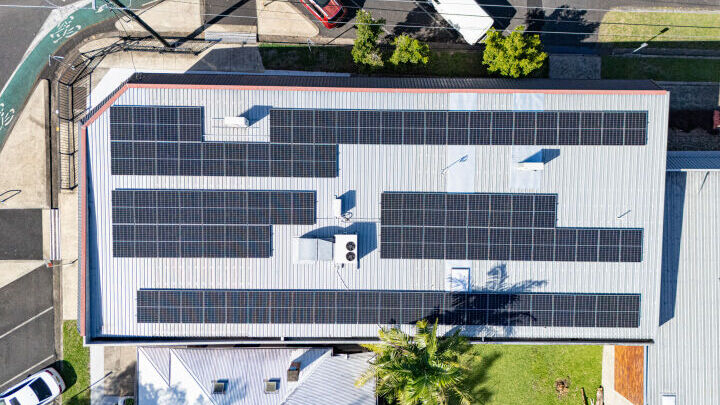
39.6kW Commercial Solar System – Northern Rivers Business Centre
A tailored rooftop solar system designed to reduce operating costs and improve long-term energy independence. Estimated savings of $9,732 per year with an estimated 2–3 year payback.
Commercial Solar System Types
#Commercial Solar Systems for Business
From rooftops and car parks to open land, farms, batteries and EV charging, explore the different ways commercial solar can be integrated into your business.

Commercial Rooftop Solar Systems
Commercial solar panels for business rooftops, designed to reduce electricity costs and support long-term energy efficiency.
- Suited to businesses with consistent energy demand
- Designed around roof condition, layout, shading, access and usage patterns
- Can be combined with battery storage for peak-period, evening or 24/7 operations

Commercial Battery Storage
Battery storage for commercial solar systems, helping businesses use more of the power they generate onsite.
- Suited to businesses with peak demand, evening usage or 24/7 operations
- Supports greater control over electricity use, demand charges and grid reliance
- Can be added to new or existing commercial solar power systems
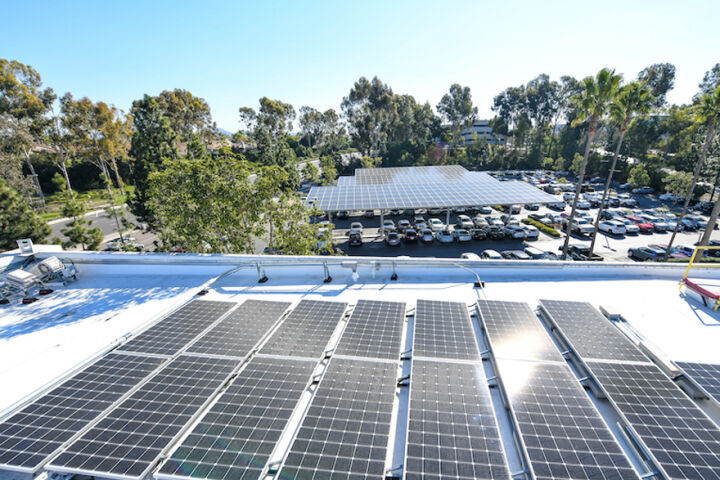
Solar Car Park Canopies
Commercial solar car park systems that generate power, create covered parking and make better use of large outdoor areas.
- Suited to sites with large car parks, high visitor numbers or limited rooftop capacity
- Designed around vehicle movement, parking layout, shading, safety and site access
- Can be integrated with EV charging for staff, customer or fleet vehicles

EV Charging for Business
EV charging solutions for commercial sites, designed to work with solar panels, battery storage and future charging needs.
- Suited to workplaces, clubs, retail sites, car parks and fleet locations
- Supports staff, customer, visitor or business vehicle charging
- Can be planned alongside commercial solar and battery storage for future growth
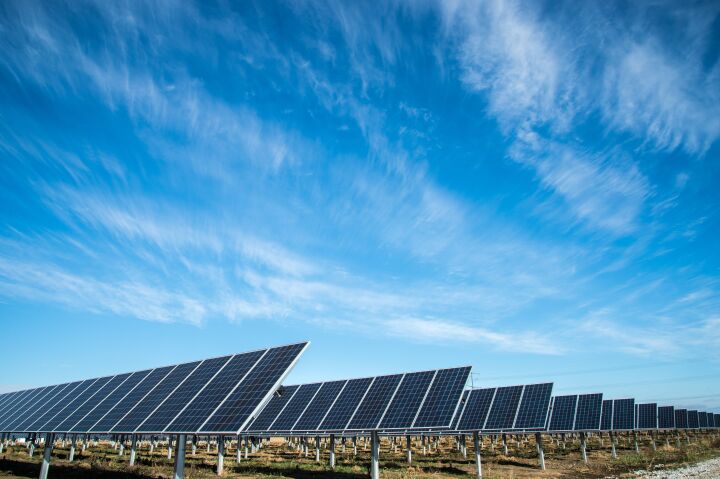
Ground-Mount Solar Systems
Ground-mount commercial solar systems for businesses with available land, higher energy demand or limited suitable roof space.
- Suited to larger sites, regional businesses, utilities, clubs and commercial properties
- Allows greater design flexibility where roof size, structure or shading is a limitation
- Can support larger commercial solar power systems and future battery integration

Agri-Solar Systems
Agri-solar systems that combine commercial solar generation with farming, vineyard and agricultural operations.
- Suited to farms, vineyards, irrigation sites and agricultural businesses
- Designed to balance solar generation with land use, crop access and daily operations
- Can help power pumps, sheds, cold storage, processing equipment and regional sites
How it works
#Our Commercial Solar Quote & Installation Process
From site assessment and commercial solar system design to approvals, installation and ongoing support, Sharp EIT manages the full commercial solar installation process with minimal disruption to your business.
- Site and energy assessment
We review your energy bills, usage profile, operating hours, tariffs, roof, land or car park availability, site constraints and business goals.
- System design and savings modelling
We design a commercial solar system matched to your load profile, available space and future energy needs, then model expected generation, savings and payback.
- Finance and incentive review
We factor in available government incentives and finance options, including $0 upfront options where eligible, so you can understand the real upfront cost, repayment options and projected return.
- Approvals, compliance and grid connection
We manage the required approvals, compliance checks and grid connection requirements before installation begins.
- Installation with minimal disruption
Our team schedules the works around your site operations, with staged installation where needed to help keep your business running.
- Commissioning, handover and support
We test system performance, provide handover documentation, and offer monitoring and ongoing support to help protect long-term performance.
#Get in Touch
Find out what commercial solar could save your business. Send us your details and we'll be in touch.
#Plan Your Commercial Solar Project
Compare commercial solar costs, system sizes, quotes and finance options to understand the right approach for your business.
#Frequently Asked Questions About Commercial Solar
Commercial solar is a solar power system designed for businesses and commercial properties to generate electricity onsite and reduce reliance on grid power. Commercial solar systems typically use solar PV panels installed on rooftops, car park canopies or ground-mounted structures, with the system sized around the business's electricity usage, available space and operating hours. You can compare commercial solar system types here.
Commercial and industrial solar both use solar PV systems to reduce grid electricity use, but industrial solar generally refers to systems designed for manufacturing, processing, warehousing and other energy-intensive operations. These sites often require larger systems because of their higher and more continuous electricity demand. Sharp EIT designs and installs commercial and industrial solar systems from 20kW through to multi-megawatt projects across Australia.
Most businesses choose solar power for business to lower operating costs and reduce exposure to rising energy prices. A well-designed commercial solar power system can also improve energy independence and support sustainability targets, without changing day-to-day operations.
Commercial solar panel costs depend on system size, site conditions, equipment, electrical infrastructure and network requirements. Larger commercial solar systems generally achieve a lower cost per kW, but the overall business case should consider expected electricity savings and payback as well as the upfront price. See our Commercial Solar System Costs & Pricing guide for indicative costs by system size.
Commercial solar savings depend on your electricity usage, tariff, operating hours, system size and how much of the solar power your business can use onsite. Businesses with high daytime electricity use generally achieve the strongest returns because more solar generation is consumed directly rather than exported. Sharp EIT models expected generation, annual savings and payback before installation so you can assess the financial case for your site. See our commercial solar costs page for typical pricing and payback factors.
Sizing is based on your interval data (when you use power), available area (roof, car park or land), and network/approval constraints.
Commercial systems often start around 20kW and scale to 100kW and 250kW+ depending on the site, with industrial solar systems commonly sitting at the higher end. For large-scale ground mount, we also engineer solar farms from 500kW to 5MW. See common commercial solar system sizes.
Sometimes, especially if your load profile matches solar production (daytime use) and the site can fit a larger system. Many businesses use commercial solar to cover a significant portion of demand and keep the grid for nights/peaks, and commercial battery storage can further reduce grid reliance. See common commercial solar system sizes.
Yes. Sharp EIT designs and installs commercial solar systems Australia-wide, supporting businesses in metropolitan and regional locations. We deliver projects from 20kW rooftop systems through to multi-megawatt commercial and industrial solar installations.
Our commercial solar teams support businesses across Sydney, Melbourne, Brisbane, Perth, Adelaide and Canberra, as well as regional cities and locations throughout Australia.
Yes. Sharp EIT designs and installs commercial solar systems for businesses across Australia, from rooftop solar and car park canopies to ground-mount and multi-megawatt projects. Our commercial solar installation service covers site assessment, system design, savings modelling, approvals and grid connection, installation, commissioning and ongoing monitoring and support.
Commercial solar installation timelines depend on system size, site complexity, network approvals and any required electrical or structural works. Smaller rooftop systems can generally be installed more quickly, while larger industrial, car park and ground-mount projects require longer engineering and delivery programs. Sharp EIT confirms the expected approval and installation timeline during the site assessment, with works planned to minimise disruption to your business.
Yes. Commercial Solar Battery storage can help capture excess solar generation, manage peak demand and improve self-consumption—particularly for businesses with evening loads or demand charges.
Yes. Many commercial solar installations are designed so battery storage can be added later. The key is choosing compatible inverters/switchboard design and allowing space for future expansion.
Yes. EV charging can be integrated with commercial solar power so charging aligns with solar production. This can work for staff parking, customer charging or fleet depots, depending on site capacity and electrical design.
Yes. Sharp EIT offers commercial solar monitoring so businesses can track solar generation, electricity consumption and system performance. Monitoring can help identify faults or unexpected performance drops early and verify that the system is generating as expected. Monitoring options depend on the system design and equipment selected and can be included as part of your commercial solar proposal.
Most commercial solar systems include manufacturer warranties on panels and inverters, plus a workmanship warranty on the installation. Exact coverage depends on the system design and the components selected. We’ll confirm the warranty terms in writing as part of your proposal so you know what’s covered and for how long.
Recent articles
#Latest Commercial Solar News & Insights
See how commercial solar is transforming energy outcomes across Australian industries — from cost reduction to smarter operations.

Commercial Solar
Commercial Solar Rebates Expanded to 1MW
The Federal Government has announced one of the biggest changes to commercial solar incentives in years.

Announcement
Sharp EIT Expands Commercial Solar Finance with DLL
Sharp EIT Solutions has partnered with DLL to provide flexible finance for commercial solar, battery and EV projects — helping eligible businesses reduce upfront costs and start saving sooner.
Think Piece
Is Commercial Solar Right for Your Business? Renters, Owners & Strata Explained
Discover the best commercial solar panels, battery systems, and full commercial solar solutions suited for all types of businesses.

Think Piece
Reducing Business Energy Costs with Commercial Solar
Slash Your Bills, Boost Sustainability, and Take Control of Your Energy Costs
Think Piece
Sun Tax in Australia: How to Avoid New Solar Export Charges
Learn how the Sun Tax affects commercial solar systems and what businesses can do to minimise costs.