
Think Piece
Commercial Battery Storage Rebates Australia
Battery rebates for businesses in Australia are expected to change from 1 May 2026 (subject to regulations). Learn who’s affected and how to protect commercial battery ROI.
#Battery Rebates for Businesses in Australia: What’s Changing From 1 May 2026
Commercial battery storage is increasingly being evaluated like any other business asset: does it reduce risk, improve operating margins, and produce a reliable return?
But incentives can change, and timing matters.
From 1 May 2026, the Federal battery discount is expected to move to a more structured approach (subject to regulations being made). For some business sites, that change won’t materially affect the decision. For others — especially where project timelines are long or system sizing is larger — it can alter the payback and the best-fit design.
This guide covers what’s changing, who is most exposed, and how to make a commercial battery decision that holds up under conservative assumptions.
#Battery Rebates for Businesses in Australia: What’s Changing
Battery rebates in Australia are not “switching off”. The change is more subtle — and more important commercially:
-
the discount mechanism continues, but
-
the method of calculating the discount is expected to become more structured, particularly by battery size, from 1 May 2026 (subject to regulations being made).
Does this apply to commercial battery storage?
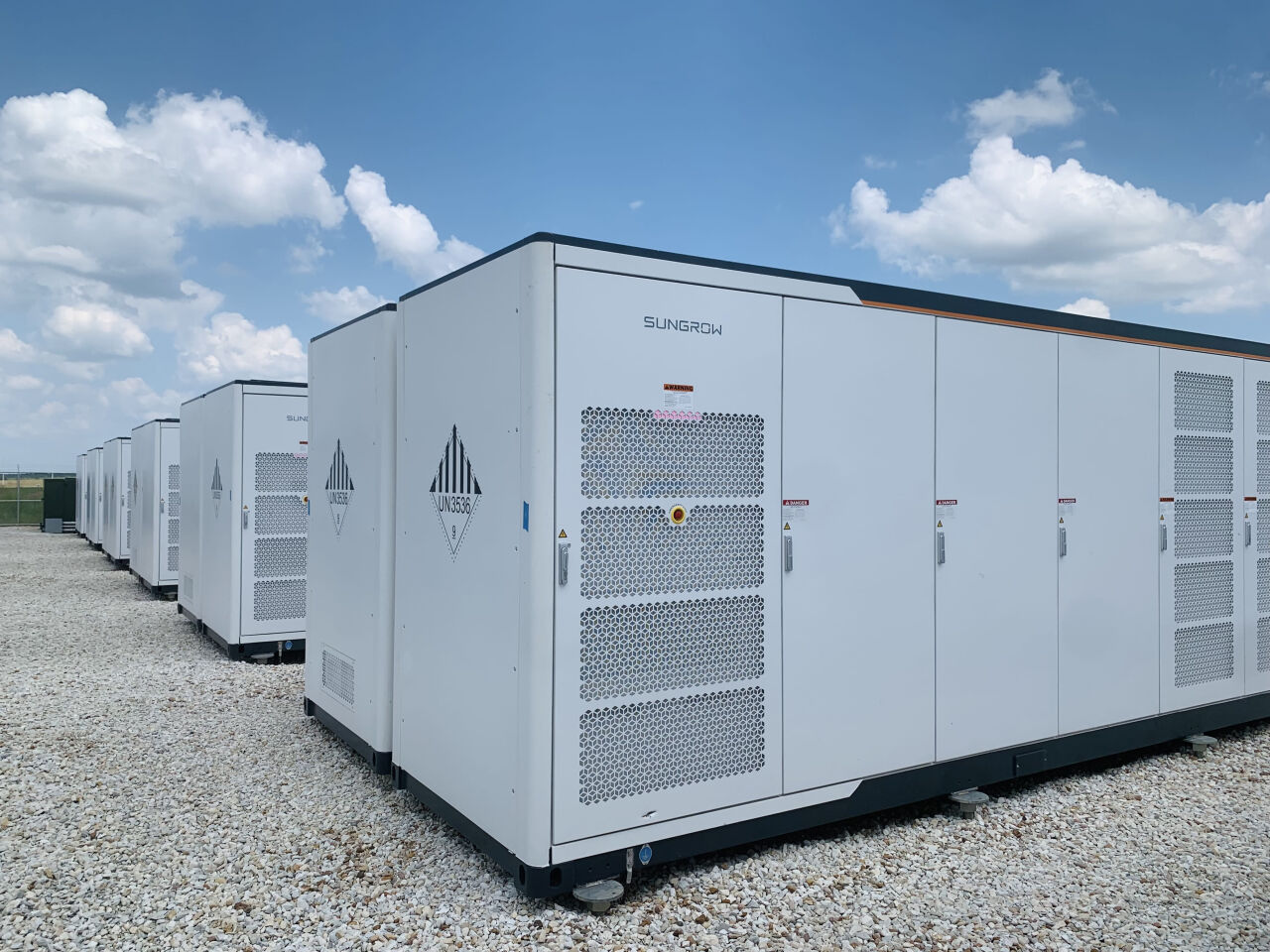
It can, depending on your system’s eligibility pathway and size category. Not every battery installed at a business site is treated the same way, which is why eligibility needs to be confirmed early (more on this below).
#STC Battery Rebate Explained (SRES): How the Federal Discount Works
For eligible systems, the Federal discount is delivered through Small-scale Technology Certificates (STCs) under the Small-scale Renewable Energy Scheme (SRES).
In practical terms, business owners usually experience this as:
-
an upfront reduction in the installed cost in the proposal/quote, because the STC value is applied as part of the pricing structure.
Why this matters for business owners
If the discount settings change, it doesn’t just change “policy”. It changes:
-
the inputs to your ROI model
-
the payback period
-
and sometimes the optimal system size.
The commercial risk isn’t that rebates end overnight — it’s that a project is approved internally using assumptions that don’t hold at install time.
#1 May 2026 Battery Rebate Changes: Who Is Most Affected
From 1 May 2026 (subject to regulations being made), the Federal battery discount is expected to shift toward a tiered / adjusted approach based on battery size.
What does a tiered battery rebate mean for battery size?
In plain English:
-
right-sized battery projects are more likely to keep strong support, while
-
larger eligible systems may receive less discount per usable kWh, meaning the incentive contributes less to the business case as size increases.
Who should pay the most attention?
You’re more exposed to the 2026 change if any of the following are true:
-
your payback relies heavily on today’s incentive settings
-
you’re considering a larger battery to materially reduce demand charges
-
your site requires switchboard upgrades, approvals, metering changes, or staged works
-
you’re multi-site and want a repeatable “battery blueprint”
-
your internal approval requires a tight payback threshold (e.g., 3–5 years)
Who is less exposed?
You may be less affected if:
-
you’re looking at a smaller system primarily for solar self-consumption uplift
-
your ROI is driven by resilience/uptime rather than incentives
-
the rebate is a “nice benefit” but not critical to the financial case
#Commercial Battery Storage ROI: The Real Risks for Business Owners
Most commercial battery decisions fail for predictable reasons — and they’re rarely technical failures.
The three common commercial risks
-
Assumption risk
The project is approved using best-case assumptions (export, tariffs, perfect load shifting) that don’t reflect the site’s actual behaviour. -
Timing risk
Approvals, upgrades, or scheduling push installation into a different incentive setting period. -
Sizing risk
Systems are sized to look impressive — not to target the site’s real cost drivers (demand peaks, tariff windows, operational constraints).
A battery is not just hardware. It’s a control strategy applied to your energy profile. If you don’t model that profile properly, the ROI becomes fragile.
#Battery Storage Sizing for Business: Why Right-Sizing Protects Payback
Oversizing is one of the most expensive mistakes in commercial storage. The safest projects are the ones built around measurable outcomes, such as:
-
demand charge reduction (peak shaving)
-
load shifting out of expensive tariff periods
-
increased solar self-consumption
-
resilience for critical circuits / operational continuity
How demand charges impact battery ROI for businesses
For many businesses, demand charges are where batteries either shine or fail. If your site has sharp peaks — even brief ones — those peaks can disproportionately drive monthly costs.
The right approach is to model:
-
when peaks occur
-
what triggers them
-
how much can realistically be shaved
-
and what control strategy achieves it consistently
This is also why “battery size” is only one variable. Controls, integration, and site behaviour often matter just as much.
#Battery Feasibility Assessment for Business: What to Do Next
If you’re considering commercial battery storage in 2025–2026, the most commercially responsible move is not to rush into procurement.
It’s to remove uncertainty early.
What data is needed for a battery storage feasibility study?
A proper feasibility assessment typically uses:
-
interval data (smart meter / billing interval data)
-
tariff and demand charge structure
-
operating hours and load drivers
-
existing or planned solar generation profile
-
site constraints (space, switchboard capacity, ventilation, compliance)
Is it better to install a commercial battery before May 2026?
Sometimes — but not always.
The question isn’t “should we race the date?”
It’s “how sensitive is our ROI to timing and incentive settings — and can we control the install window?”
If your project has long lead elements (approvals, upgrades, staged works), starting feasibility early protects you from being forced into a compromised decision later.
#Why Businesses Use Sharp EIT for Commercial Battery Storage Advice
Sharp EIT Solutions approaches battery projects like an investment decision, not a product sale.
We help businesses:
-
confirm eligibility pathway and project readiness
-
model conservative and base-case ROI scenarios
-
right-size the system to demand and tariff drivers
-
design a control strategy that performs under real operating conditions
-
plan timing to avoid preventable surprises
If battery storage is on your shortlist, the next step is a Battery Feasibility & ROI Assessment — built around your site’s real numbers.
#Reduce Uncertainty Before You Invest in Battery Storage
If you’re considering battery storage, the most important step is understanding whether it actually stacks up for your site — before timing, sizing or incentive changes affect the outcome.
Our feasibility assessment focuses on demand charges, operating behaviour, system sizing and timing considerations so you can make a confident, commercially sound decision.
#FAQs: Battery Rebates and Commercial Battery Storage
The Cheaper Home Batteries Program is funded by government and was expanded after demand surged. The program was originally estimated at $2.3 billion, and the government announced it would expand to an estimated $7.2 billion over the next 4 years.
If you want to understand what this could mean for your site, start here: Commercial Battery Storage Solutions.
The Government has flagged adjustments from 1 May 2026 (subject to regulations being made).
See how timing impacts system sizing and ROI: Get a battery storage quote
The changes are designed to keep the discount “appropriate for small, medium and larger battery systems”, with adjustments from 1 May 2026 (subject to regulations being made).
In practical terms, businesses considering larger eligible batteries should pay closer attention to timing and modelling.
Not sure what size you need? Battery sizing & feasibility.
The Australian Government says the program supports around a 30% discount on eligible small-scale battery systems, delivered via retailers/installers through the Small-scale Renewable Energy Scheme (SRES).
The program covers small-scale batteries (commonly referenced as 5 kWh to 100 kWh).
See what your discount could look like in dollars: Request a commercial battery quote.
Yes — the program is described as supporting Australian households and small businesses with a discount on eligible batteries.
If you’re a business owner, start with: Commercial Battery Storage for Business.
The Government describes the discount as applying to eligible batteries connected to new or existing rooftop solar.

Announcement
Sharp EIT Solutions Powers up the Supercars